Scale AI workloads with Ray on Google Cloud C4A Axion VM
Introduction
Get started with Ray on Google Axion C4A
Create a firewall rule for Ray Dashboard and Serve
Create a Google Axion C4A Arm virtual machine on GCP
Deploy Ray on GCP SUSE Arm64
Run Distributed Workloads with Ray
Ray Tune, Serve, and Benchmarking
Next Steps
Scale AI workloads with Ray on Google Cloud C4A Axion VM
Create a firewall rule in Google Cloud Console to expose required ports for the Ray Dashboard and Ray Serve API.
For help with GCP setup, see the Learning Path Getting started with Google Cloud Platform .
Configure the firewall rule
Navigate to the Google Cloud Console , go to VPC Network > Firewall, and select Create firewall rule.
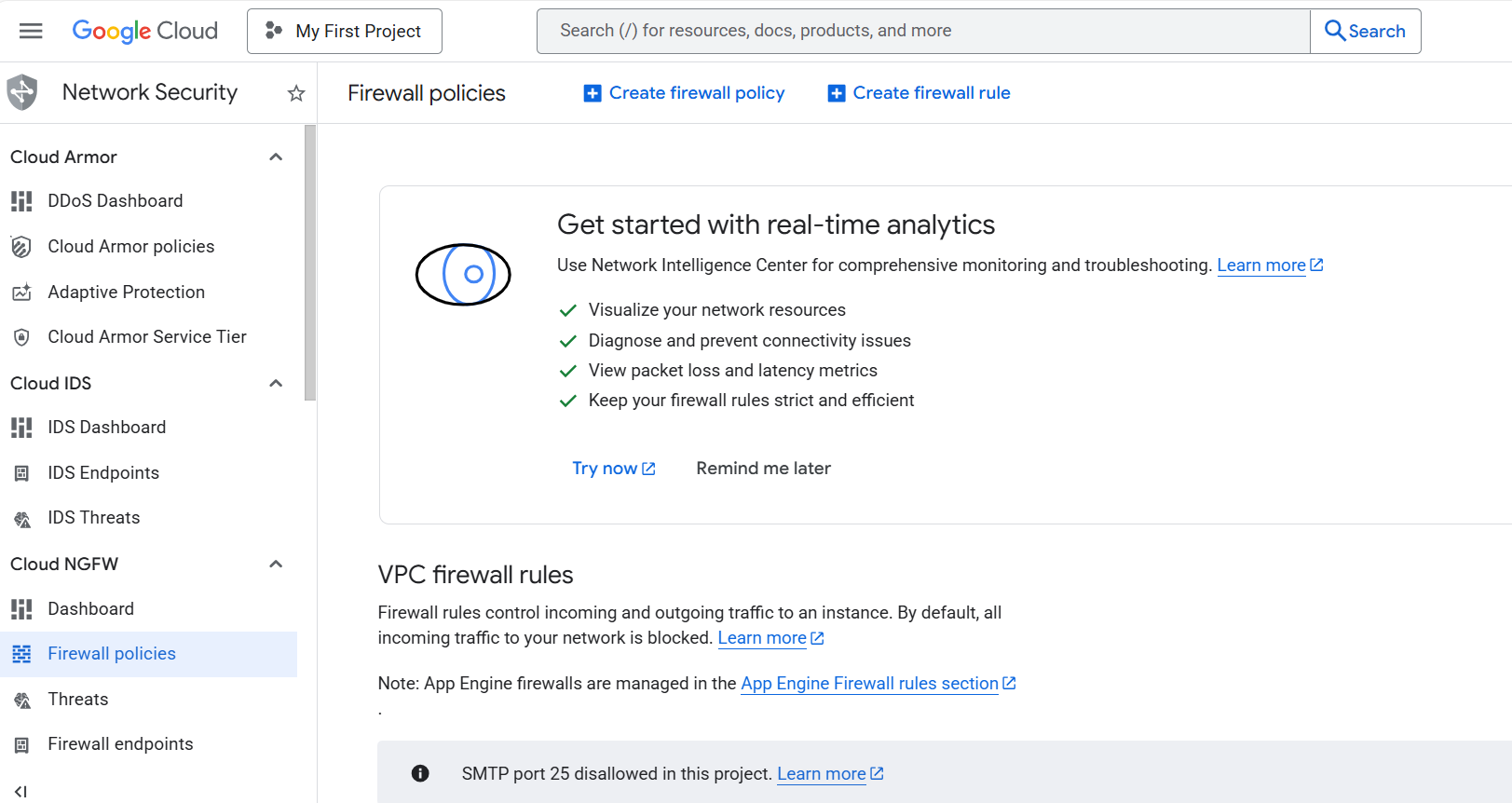 Create a firewall rule in Google Cloud Console
Next, create the firewall rule that exposes required ports for Ray.
Set the Name of the new rule to “allow-ray-ports”. Select your network that you intend to bind to your VM.
Set Direction of traffic to “Ingress”. Set Allow on match to “Allow” and Targets to “Specified target tags”. Enter “allow-ray-ports” in the Target tags text field. Set Source IPv4 ranges to “0.0.0.0/0”.
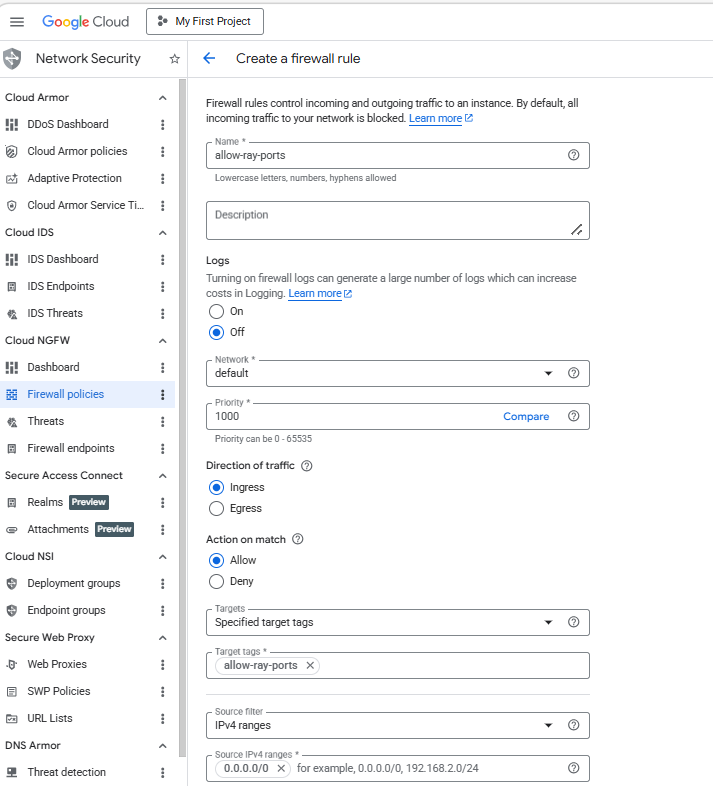 Configuring the allow-ray-ports firewall rule
Finally, select Specified protocols and ports under the Protocols and ports section. Select the TCP checkbox and enter:
8265,8000,6379
- 8265 → Ray Dashboard
- 8000 → Ray Serve API
- 6379 → Ray Head Node
Then select Create.
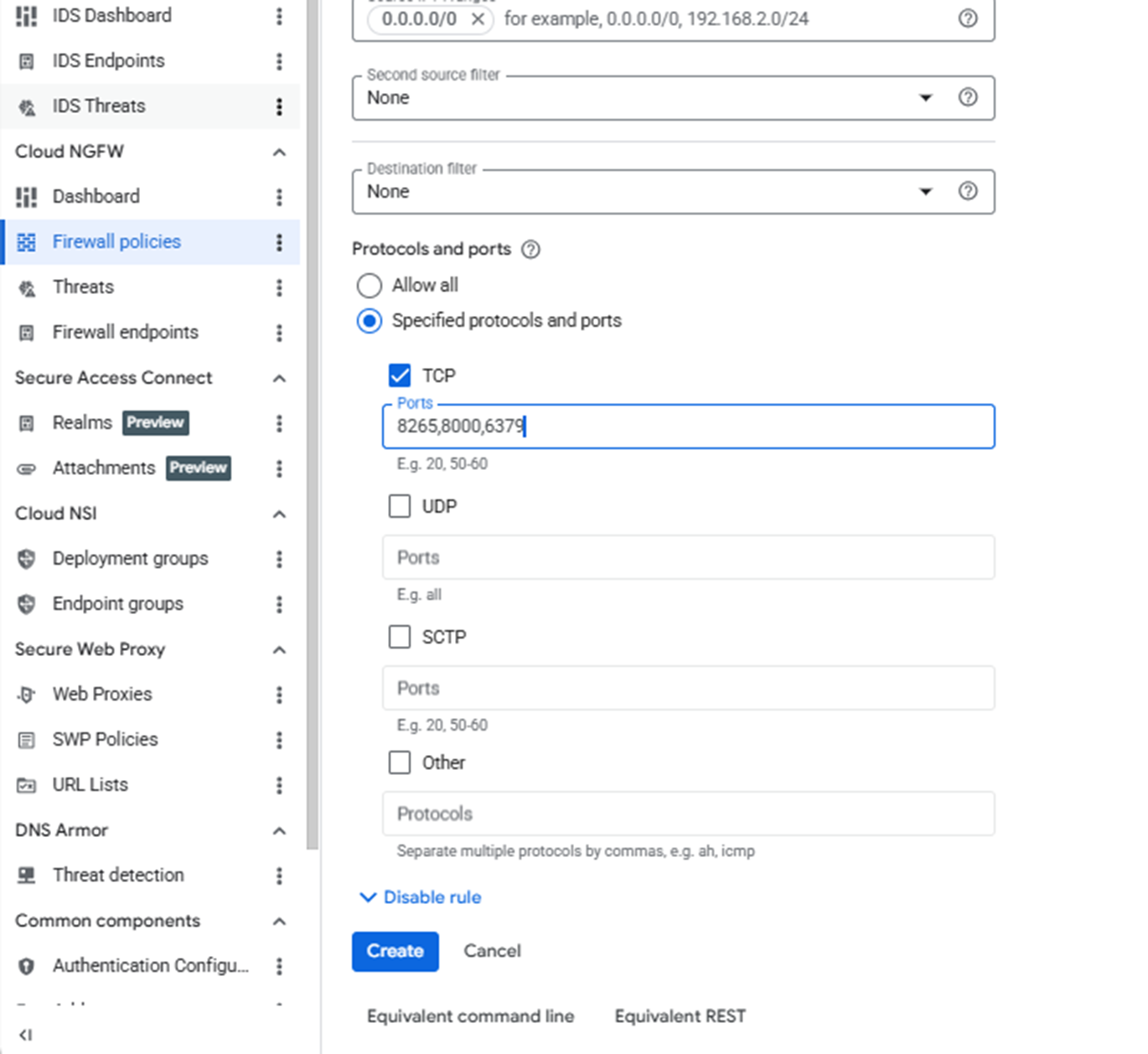 Setting Ray ports in the firewall rule
What you’ve accomplished and what’s next
In this section, you:
- Created a firewall rule to expose Ray Dashboard and Serve API
- Enabled external access to monitor jobs and access deployed services
Next, you’ll deploy and run Ray workloads on your Arm-based virtual machine.