Deploy RabbitMQ on Arm64 Cloud Platforms (Azure and GCP)
Introduction
Learn about Arm-based cloud platforms for RabbitMQ
Create an Azure Cobalt 100 virtual machine
Install RabbitMQ on Azure Cobalt 100
Validate RabbitMQ on Azure
Create a firewall rule for RabbitMQ
Create a Google Axion C4A virtual machine
Install RabbitMQ on Google Cloud SUSE VM
Validate RabbitMQ on Google Cloud
RabbitMQ use Case 1 - event processing with Python Workers
RabbitMQ use case 2 - WhatsApp Notification
Next Steps
Deploy RabbitMQ on Arm64 Cloud Platforms (Azure and GCP)
Introduction
Learn about Arm-based cloud platforms for RabbitMQ
Create an Azure Cobalt 100 virtual machine
Install RabbitMQ on Azure Cobalt 100
Validate RabbitMQ on Azure
Create a firewall rule for RabbitMQ
Create a Google Axion C4A virtual machine
Install RabbitMQ on Google Cloud SUSE VM
Validate RabbitMQ on Google Cloud
RabbitMQ use Case 1 - event processing with Python Workers
RabbitMQ use case 2 - WhatsApp Notification
Next Steps
Overview
In this section, you’ll provision a Google Axion C4A Arm virtual machine on Google Cloud Platform (GCP) using the c4a-standard-4 (4 vCPUs, 16 GB memory) machine type in the Google Cloud Console. You will then use this GCP VM to execute a few RabbitMQ use cases.
For support on GCP setup, see the Learning Path Getting started with Google Cloud Platform .
Provision a Google Axion C4A Arm VM in Google Cloud Console
To create a virtual machine based on the C4A instance type, navigate to the Google Cloud Console and go to Compute Engine > VM Instances. Select Create Instance.
Under Machine configuration, populate fields such as Instance name, Region, and Zone. Set Series to C4A and select c4a-standard-4 for machine type.
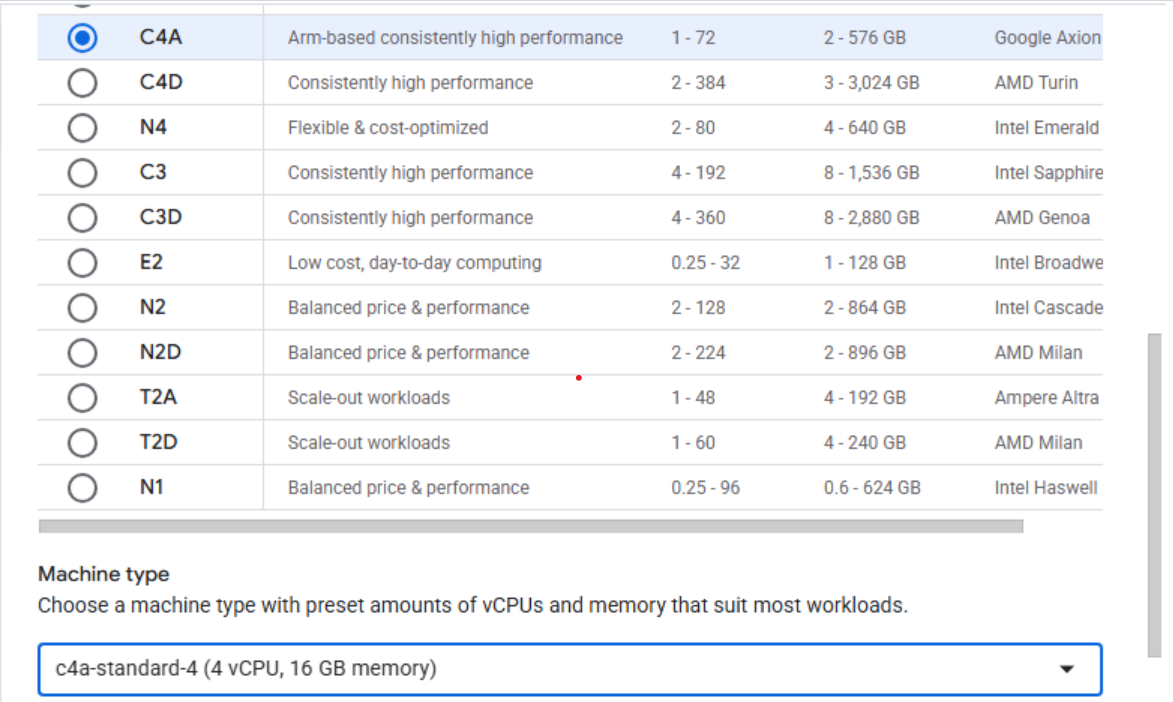 Creating a Google Axion C4A Arm virtual machine in Google Cloud Console
Under OS and Storage, select Change, then choose an Arm64-based OS image. For this Learning Path, use SUSE Linux Enterprise Server. Select Pay As You Go for the license type and select Select.
Under Networking, enable Allow HTTP traffic and add “allow-tcp-15672” as a network tag in the Network tags text field.
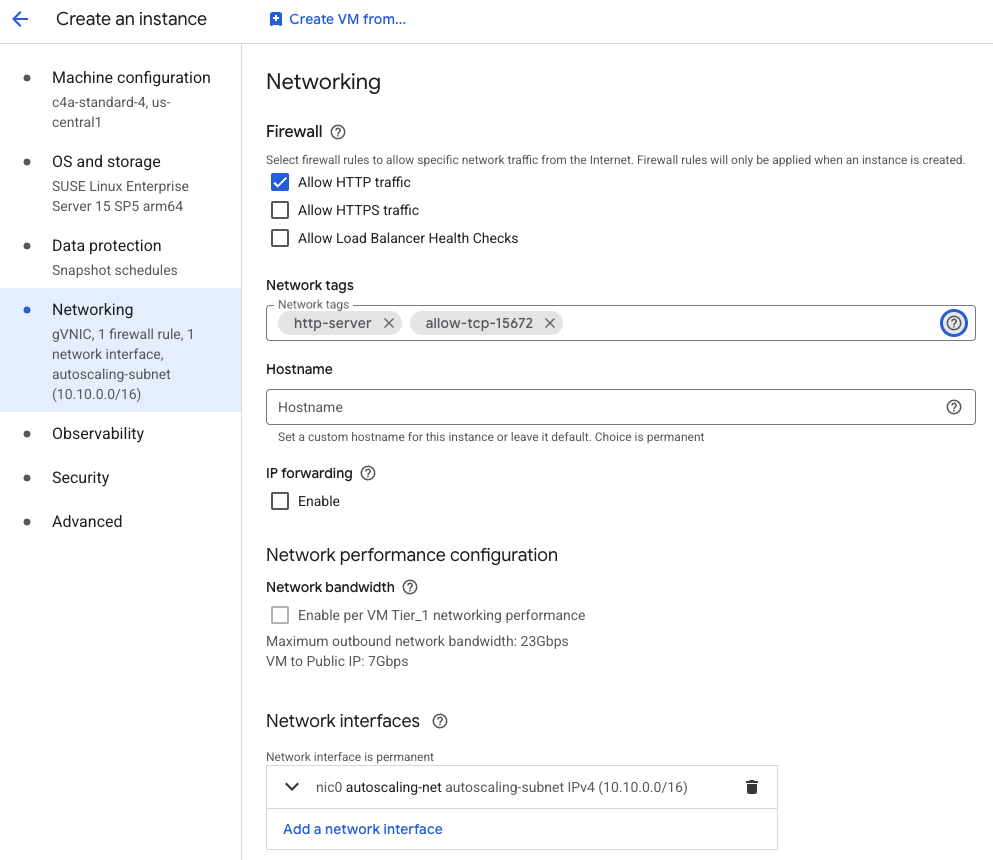 Adding the TCP/15672 firewall rule to the VM
Select Create to launch the instance. After the instance is created, the SSH option and public IP address appear in the VM instances list. Save the public IP address for later use. Select the SSH option to open an SSH shell to your VM instance.
 Invoke an SSH session into your running VM instance
A browser window opens with a shell session to your VM instance.
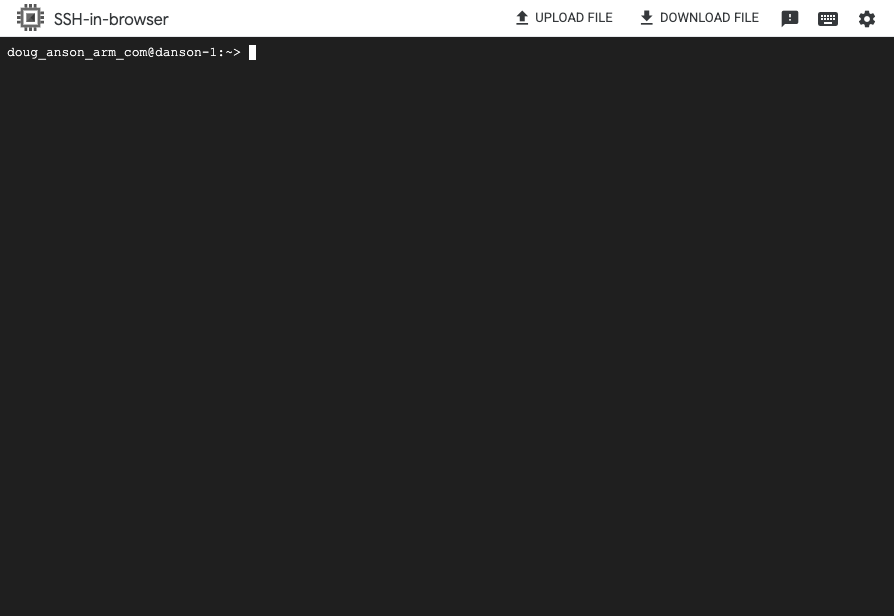 Terminal shell in your VM instance