Deploy RabbitMQ on Arm64 Cloud Platforms (Azure and GCP)
Introduction
Learn about Arm-based cloud platforms for RabbitMQ
Create an Azure Cobalt 100 virtual machine
Install RabbitMQ on Azure Cobalt 100
Validate RabbitMQ on Azure
Create a firewall rule for RabbitMQ
Create a Google Axion C4A virtual machine
Install RabbitMQ on Google Cloud SUSE VM
Validate RabbitMQ on Google Cloud
RabbitMQ use Case 1 - event processing with Python Workers
RabbitMQ use case 2 - WhatsApp Notification
Next Steps
Deploy RabbitMQ on Arm64 Cloud Platforms (Azure and GCP)
Introduction
Learn about Arm-based cloud platforms for RabbitMQ
Create an Azure Cobalt 100 virtual machine
Install RabbitMQ on Azure Cobalt 100
Validate RabbitMQ on Azure
Create a firewall rule for RabbitMQ
Create a Google Axion C4A virtual machine
Install RabbitMQ on Google Cloud SUSE VM
Validate RabbitMQ on Google Cloud
RabbitMQ use Case 1 - event processing with Python Workers
RabbitMQ use case 2 - WhatsApp Notification
Next Steps
Create a firewall rule in Google Cloud Console to expose TCP port 15672 for the RabbitMQ management interface.
For support on GCP setup, see the Learning Path Getting started with Google Cloud Platform .
Configure the firewall rule
Navigate to the Google Cloud Console , go to VPC Network > Firewall, and select Create firewall rule.
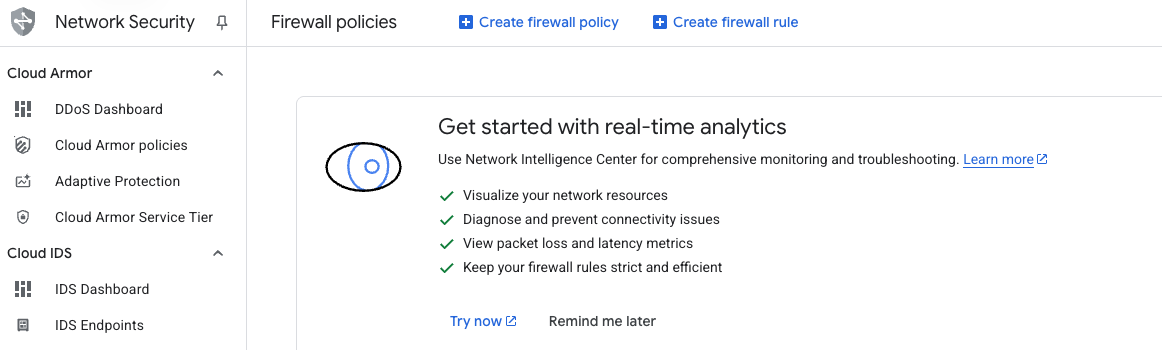 Create a firewall rule
Next, create the firewall rule that exposes TCP port 15672. Set the Name of the new rule to “allow-tcp-15672”. Select your network that you intend to bind to your VM (default is “autoscaling-net” but your organization might have others).
Set Direction of traffic to “Ingress”. Set Allow on match to “Allow” and Targets to “Specified target tags”. Enter “allow-tcp-15672” in the Target tags text field. Set Source IPv4 ranges to “0.0.0.0/0”.
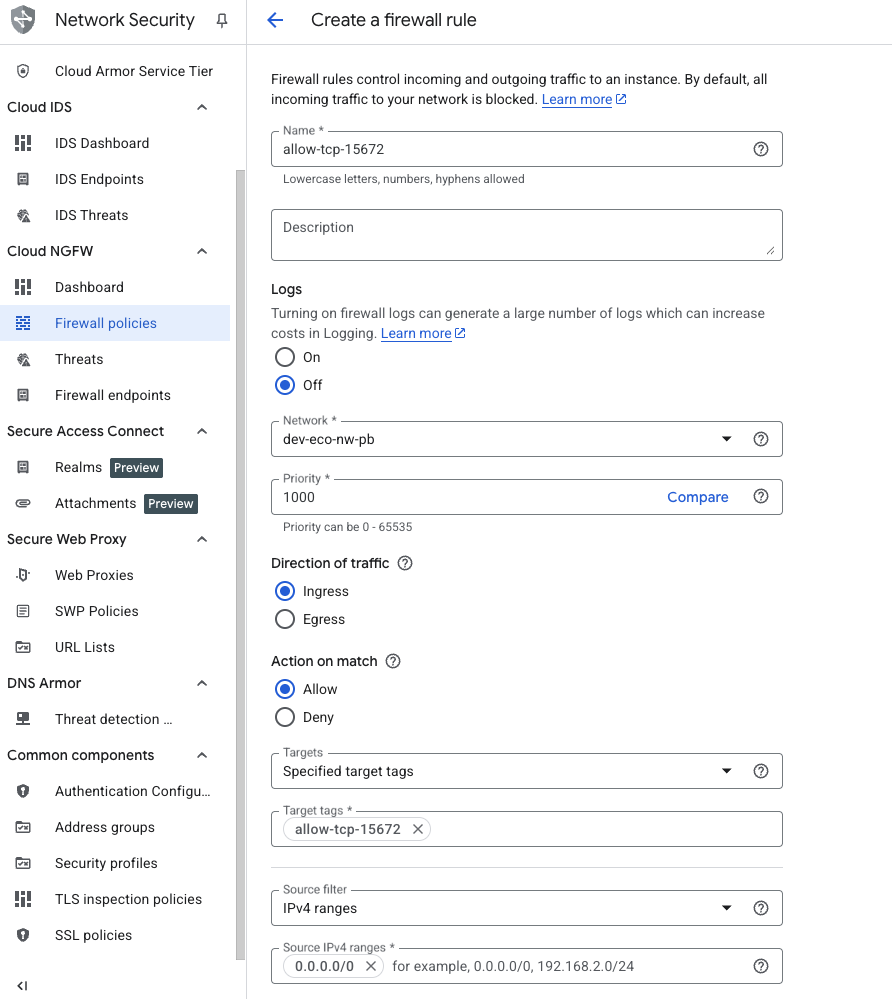 Creating the TCP/15672 firewall rule
Finally, select Specified protocols and ports under the Protocols and ports section. Select the TCP checkbox, enter “15672” in the Ports text field, and select Create.
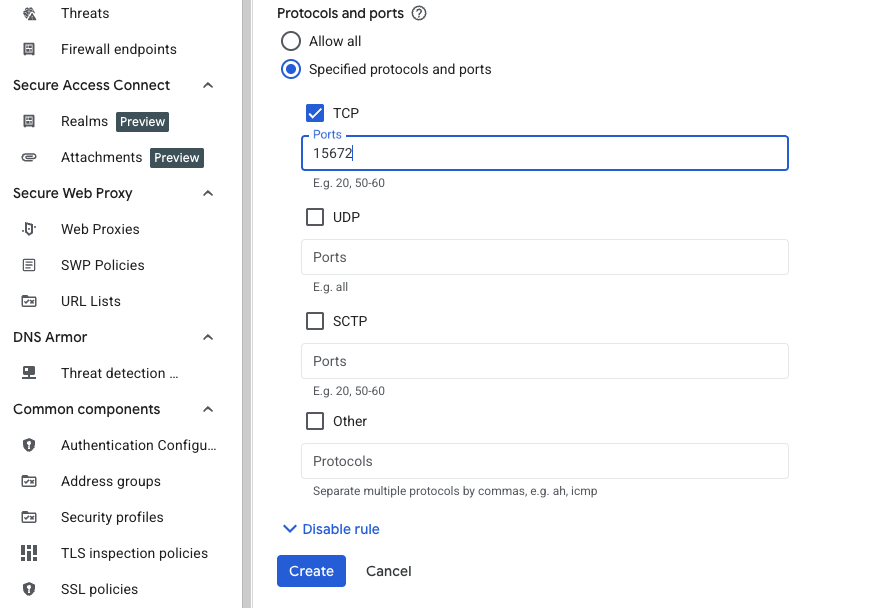 Specifying the TCP port to expose
The network firewall rule is now created and you can continue with the VM creation.