Deploy MinIO on Azure Cobalt 100
Introduction
Overview of Azure Cobalt 100 and MinIO
Create an Azure Cobalt 100 virtual machine
Open MinIO ports in the Azure Network Security Group
Install and configure MinIO on Azure Cobalt 100
Benchmark MinIO storage performance on Azure Cobalt 100
Use MinIO for AI/ML Dataset and Model Storage
Next Steps
Deploy MinIO on Azure Cobalt 100
Introduction
Overview of Azure Cobalt 100 and MinIO
Create an Azure Cobalt 100 virtual machine
Open MinIO ports in the Azure Network Security Group
Install and configure MinIO on Azure Cobalt 100
Benchmark MinIO storage performance on Azure Cobalt 100
Use MinIO for AI/ML Dataset and Model Storage
Next Steps
Configure Azure firewall for MinIO
To allow external traffic on ports 9000 and 9001 for MinIO running on an Azure virtual machine, open the ports in the Network Security Group (NSG) attached to the virtual machine’s network interface or subnet.
For more information about Azure setup, see Getting started with Microsoft Azure Platform .
Create a firewall rule in Azure
To expose TCP ports 9000 and 9001, create a firewall rule.
Navigate to the Azure Portal , go to Virtual Machines, and select your virtual machine.
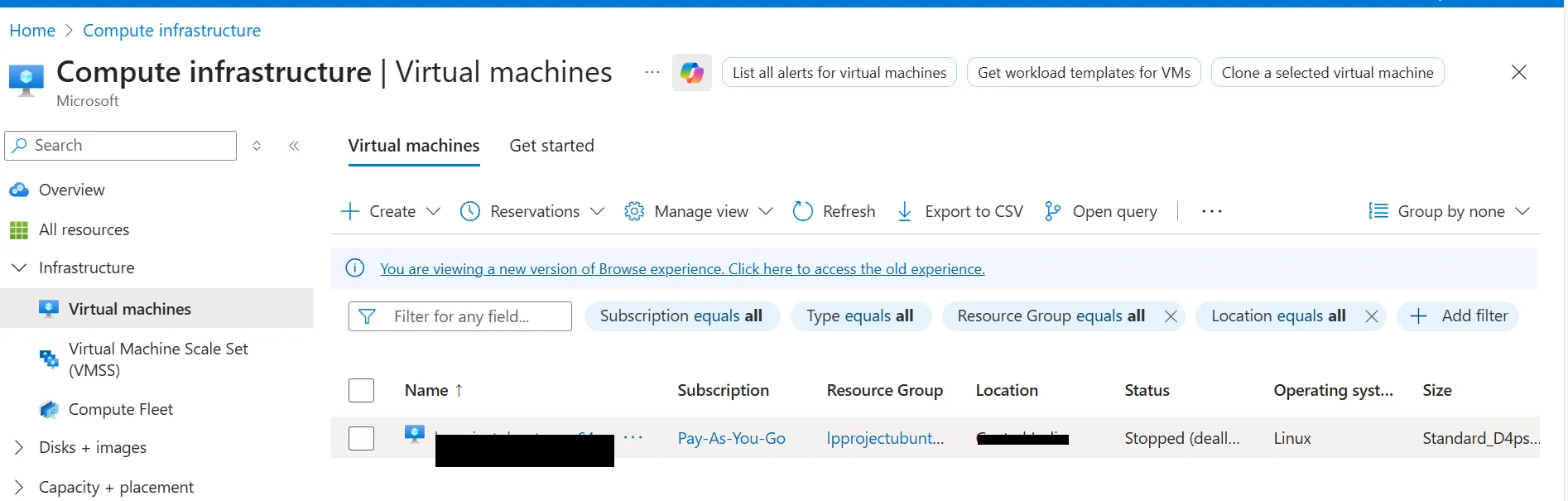 Virtual Machines
In the left menu, select Networking and in the Networking section, select Network settings associated with the virtual machine’s network interface.
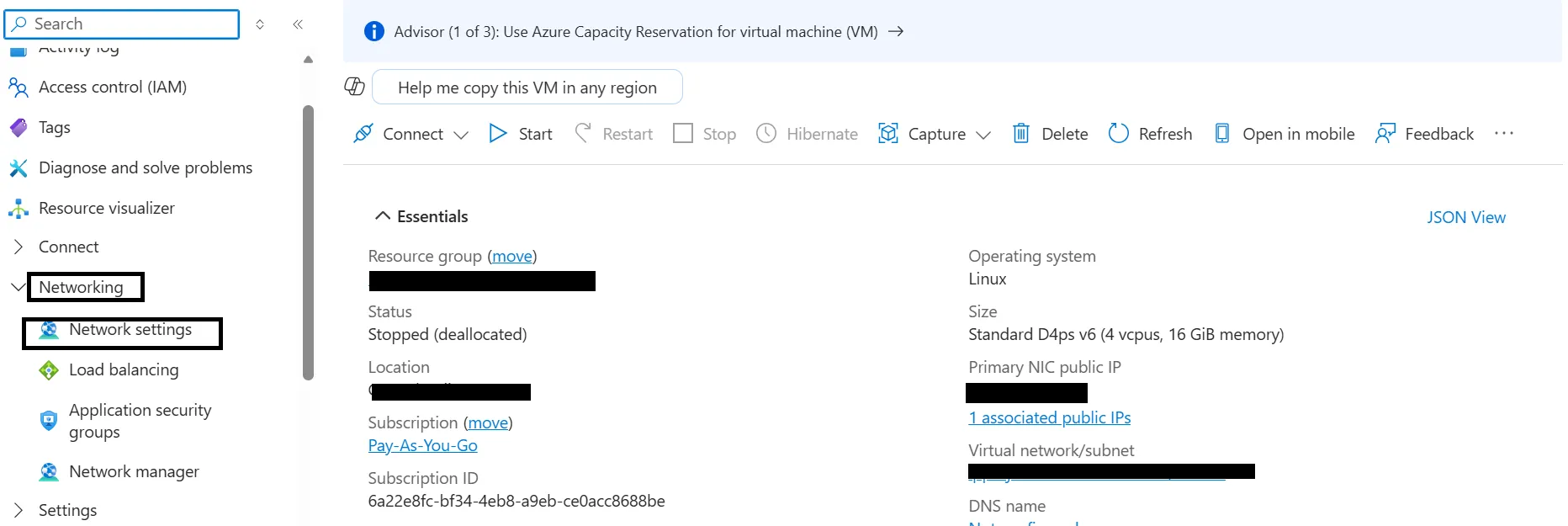 Network settings
Navigate to Create port rule, and select Inbound port rule.
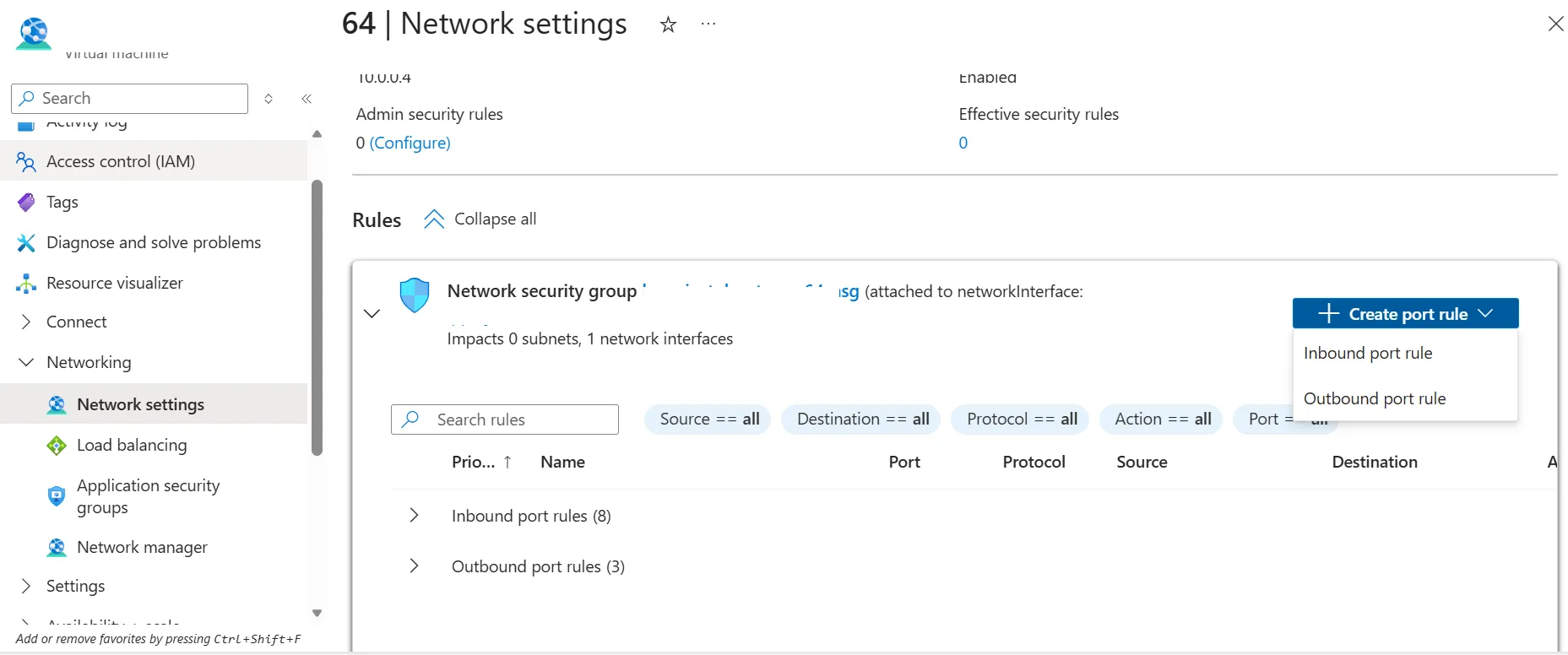 Create rule
Configure it using the following details:
- Source: Any
- Source port ranges: *
- Destination: Any
- Destination port ranges: 9000,9001
- Protocol: TCP
- Action: Allow
- Name: allow-tcp-9000-9001
This rule allows traffic from any source IP address. For production use, restrict the Source to your own IP address or a specific CIDR range.
After filling in the details, select Add to save the rule.
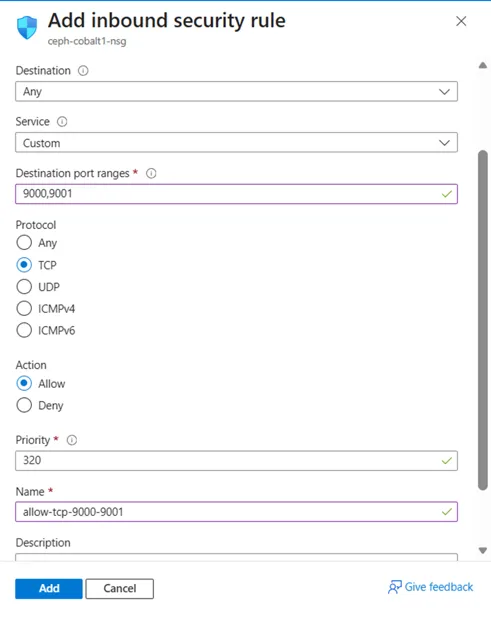 Inbound security rule configuration
The network firewall rule is now created, allowing MinIO to communicate over ports 9000 and 9001. Now that the ports are open, you’re ready to install and start the MinIO server.